Coaching
Planning training that transfers to game day
How volunteer coaches can build a 60 minute session around last week's game and the next opponent, keep drills game-like, and get more from two nights a week.
· 4 min read
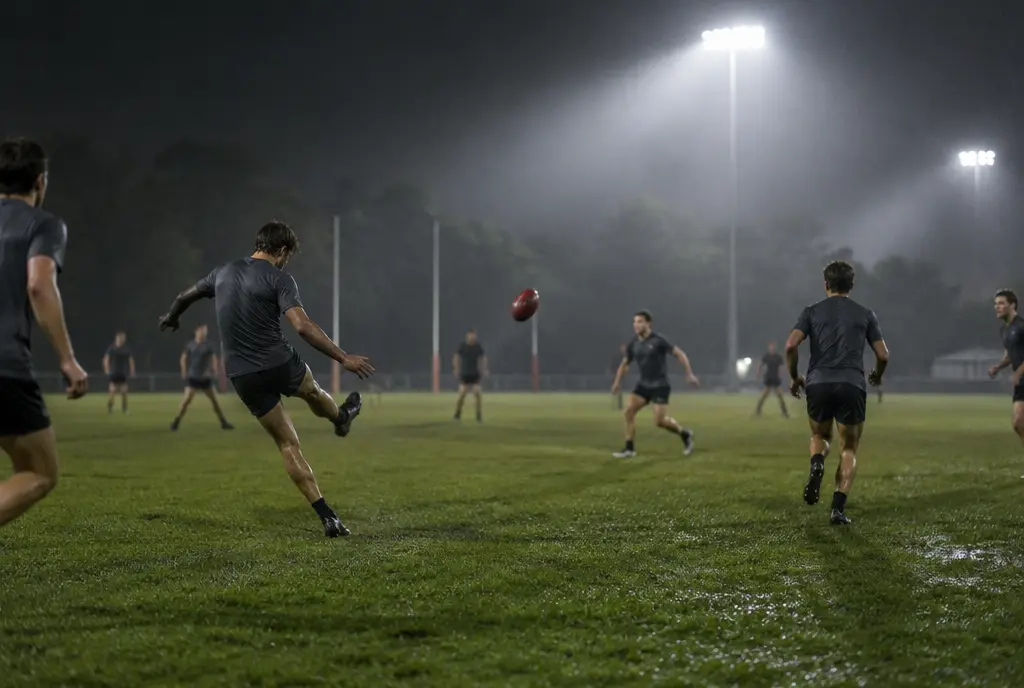
Start from last game and the next opponent
Most local clubs get two sessions a week of about an hour. That is not much time, so every session needs a reason. The best reason is usually sitting in last week's stats and next week's fixture.
Pick one or two themes for the week, never five. Look for the biggest gap between you and the opposition last game, then the main threat in the team you play next. 'We lost the clearances by 12 and they have a strong ruck' becomes a theme of stoppage roles and ruck follow-up.
Build the session on a 60 minute clock
A simple template keeps planning quick and makes sure the basics get touched every week. Adjust the minutes to suit your theme, but keep the order.
- Warm up with the ball (about 8 minutes): partner kicks building in distance, kicks to a leading partner, and a few on the non-preferred side.
- Kicking and handball under pressure (about 15 minutes): kicking lanes with a chaser, handball under the tackle, and tackle and release within two seconds.
- Line work (about 10 minutes): forwards on leading patterns, mids on stoppage roles, backs on one-on-one contests with a spoil first, rucks on taps to zones.
- A game (about 15 minutes): a small-sided game built around the theme, such as a tackle game where possession only changes on a tackle or intercept.
- Craft to finish (about 10 minutes): set shots with a routine, kick-ins, or the one skill the theme needs most.
Make drills look like the game
Uncontested drills are fine for warming up, but skills only transfer when they are done under pressure. Add a chaser, a defender or a time limit as soon as players have the basics.
- Keep drills short and competitive: three or four minutes, then change.
- Put a number on it: eight kicks out of ten hit the target, or win the tackle count in the game.
- Match the drill to the theme. Losing the ball in the back half points to kicking under pressure and a set kick-in plan, not more running.
Plan the week, not just the night
The two sessions should do different jobs. The first session of the week can carry more volume and introduce the theme. The last session before the game should be shorter and sharper, rehearse the game plan, and let players finish fresh.
- Avoid heavy running or brand new content in the final session.
- Give players carrying a niggle or a big workload a modified session, and talk to whoever looks after injuries at your club.
- In finals, cut the volume, keep the intensity and touch, and rehearse set plays such as kick-ins and centre bounces rather than adding new structures.
Use one or two cue words per drill
Volunteer players are learning while tired and in the dark. Long explanations don't stick. Give one or two short cues per drill, phrased as actions, and repeat them every week.
- 'Eyes up, hit the lead.'
- 'First to the ball.'
- 'Spoil, then crumb.'
- 'Kick to space, not to a pack.'
Praise the behaviour that leads to the result: the chase, the shepherd, the second effort. Those are the things players control.
Close the loop on game day
After the next game, look at the stat your theme was meant to move and compare it with the week before. Tell the group the one thing that improved and the one thing to fix next. Trust trends over three or more games: one game is a signal, not a verdict.
Keep track of who was at training, too. Attendance helps at selection, and it shows which players are getting the reps they need.